The Subscription
Lantern (2024)
The Subscription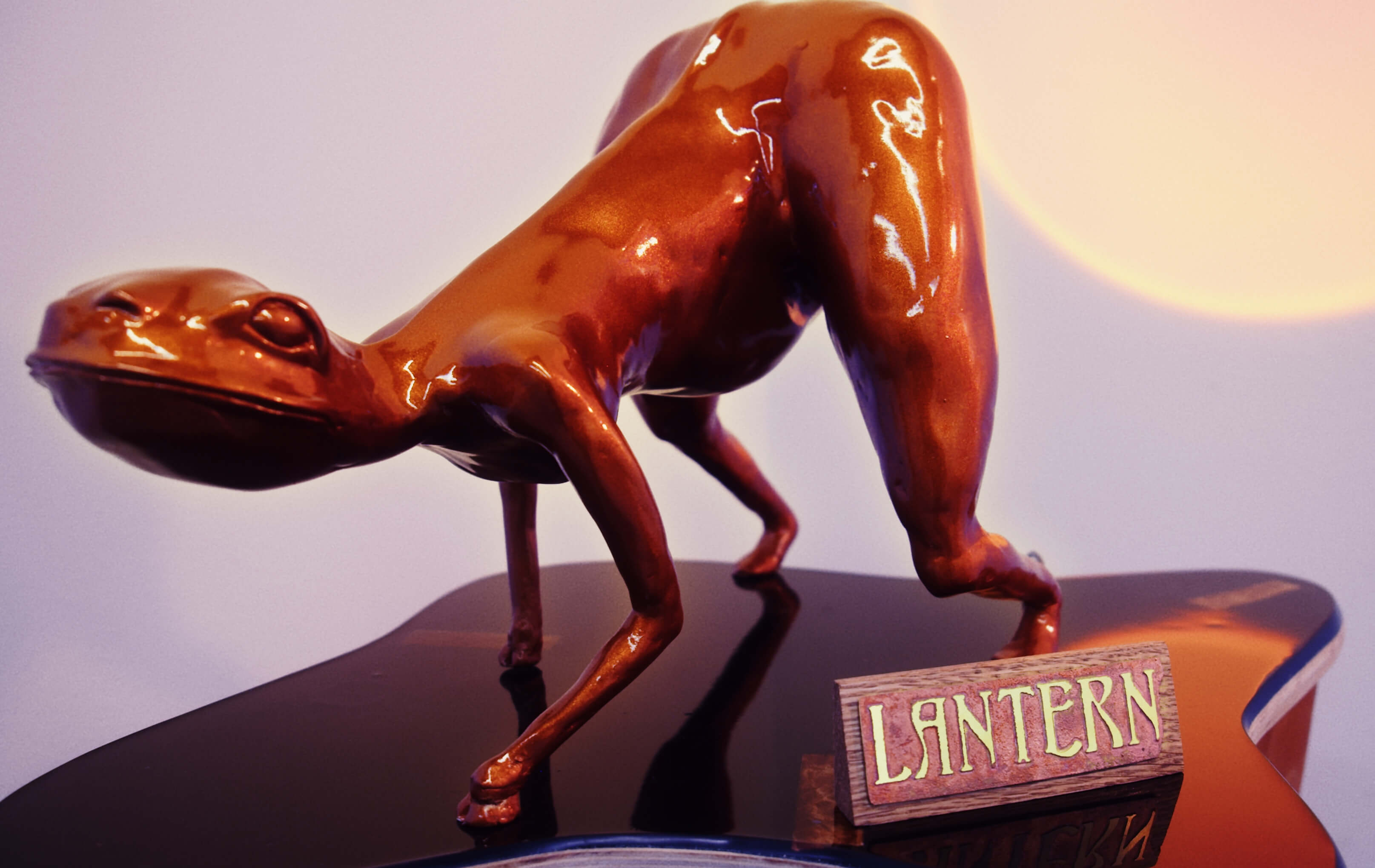
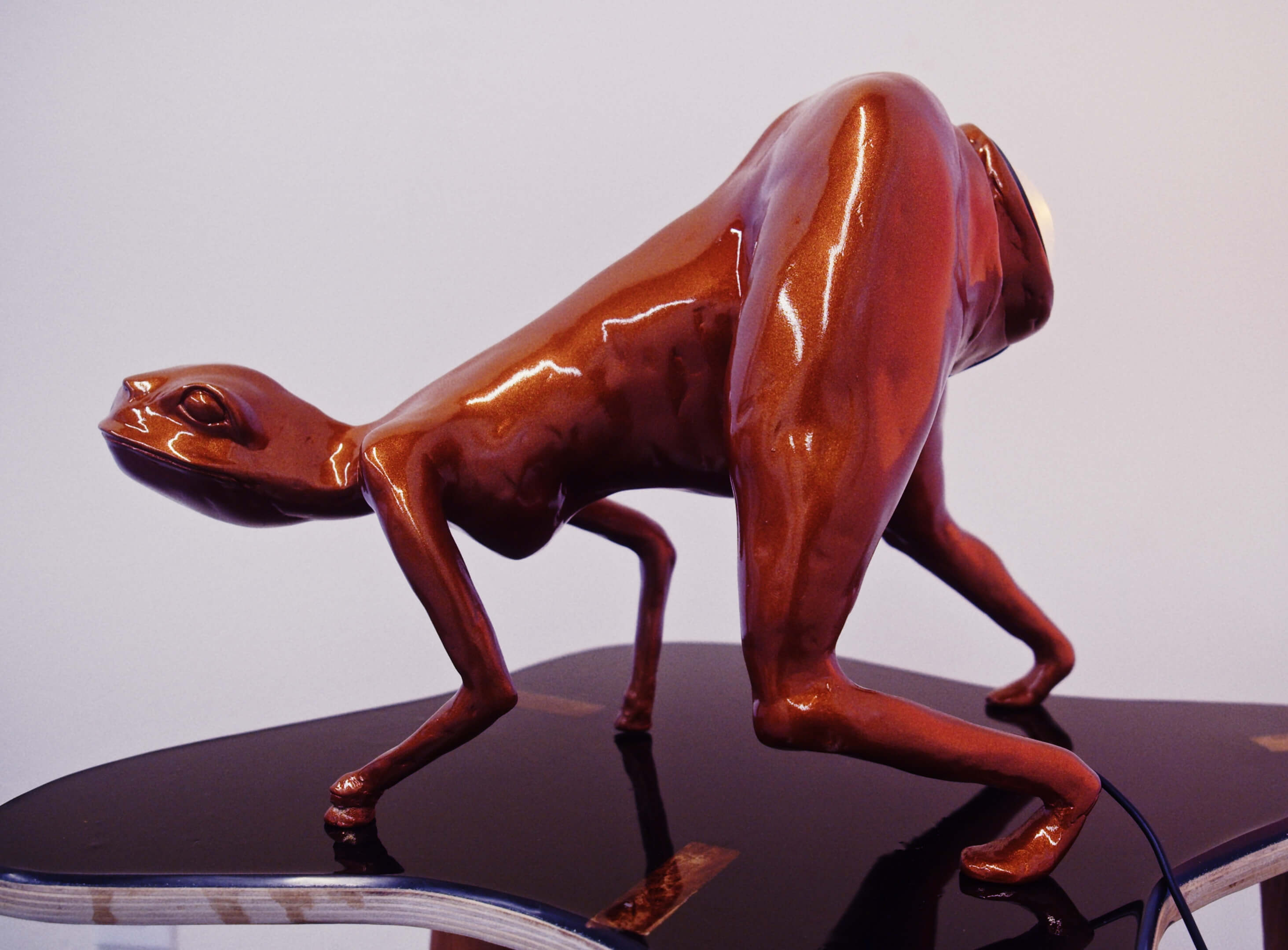
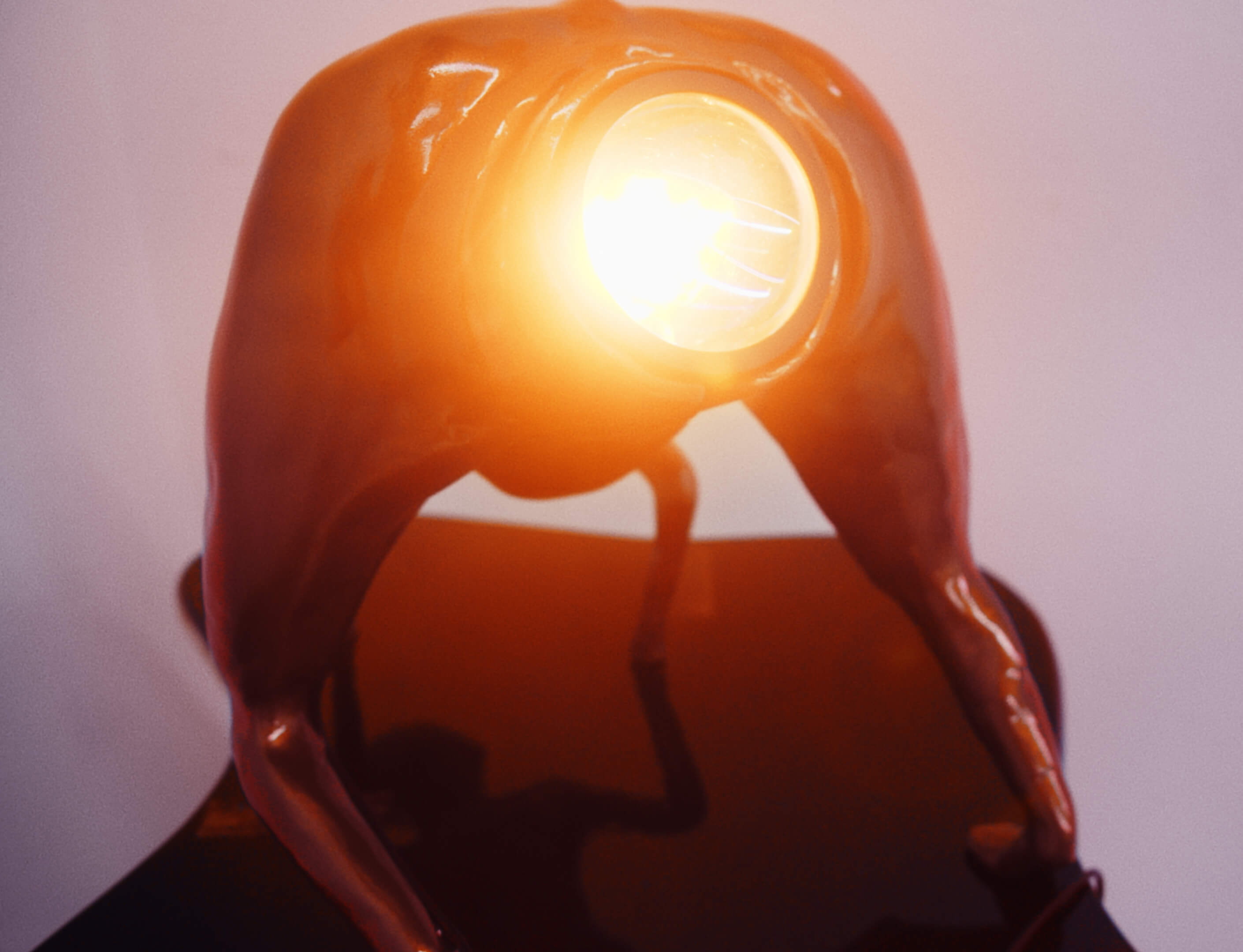
Lantern (2024)
The SubscriptionIn her essay The Powers of Horror, Julia Kristeva explains that we become individuals by excluding everything incommensurate with being a self. A Lacanian, she believes the primary condition of selfhood is otherness; there must be something else in order for us to be. Growing up, we annotate the world as either us or something else, but we aren't very good at this. We find a lot of things difficult to label. Rotting materials are the worst: dead remains, bad food. Corpses are bodies, and we are bodies too, but corpses are dead, and we are not, and yet we are on our way. Likewise, our bodies are comprised of food, but food is dead, or if it isn't, it's on its way. Due to this paradox, spoiled milk and cadavers fall under Kristeva's classification of The Abject. Given the Venn diagram of Self and Other, we work to eliminate, conceal, or fend off everything in the middle category, and we call this "abjection." The images to which we react with "abject horror" get carved away from the marble block, and we are left with a "self-image." Our self-image describes the rules for being who we are: to us we are ourselves, to each other we are others, and we are never anything else. "But never say never," says my mouth. And you hear the voice inside your ears. Orifices refute the self-image. Through orifices, others enter us (and we enter objects: "who's that on the phone?"). Through orifices, parts of ourselves leave, becoming others. And while our bodies are vulnerable, and they can leak from just about anywhere, wounds can be avoided with care, but orifices are essential.
In his unconventional lyric essay The Solar Anus, George Bataille writes, "A man who finds himself among others is irritated because he does not know why he is not one of the others," and later on, "in bed next to a girl he loves, he forgets that he does not know why he is himself instead of the body he touches." For Bataille, this condition is both an illusion and a primal truth. In his view, all is connected, and the universe is made up of appearances that "parody" each other's forms. This "parodic" theory of reality might be better understood today as "memetic." Children imitate their parents in order to succeed in a world of people who their parents are imitating. A flower imitates the sexual organs of a bee because plants can't move around to find their own partners. A scammer imitates a banker (or a politician) to get rich (or get by). A virus imitates an antibody to evade the immune system. All of these things eventually make what they fake, verifying their reality by imitating something known to be real. But where did it begin? If once the world was a void in space, who was around to get copied? In death, who can we mime? Simply put, The Solar Anus describes "revolution" (in both senses) as nature's core principle. Revolution is the movement that all consequent phenomena impersonate. Our planet, which according to Bataille, "eats nothing" but nonetheless "ejects the contents of its entrails," revolves around the sun in an ancient choreography of stellar romance. Everything that emerges from our geo-solar circumstances: "An abandoned shoe, a rotten tooth, a snub nose, the cook spitting in the soup of his masters," exists as a small act of revolution in accordance with heliocentric orbit. "Beings only die to be born," says Bataille, and "phalluses" only "leave bodies in order to enter them," and "Communist workers" will eventually chop off the "asexual noble heads of the bourgeois." Each instance of revolution makes itself in the image of the grand orbital trajectory of planets. Bataille refers to this ultimate revolutionary principle as "the Jesuve," which is a composite word blending Jesus, with je suis, Mount Vesuvius, and the goddess Venus. This might at first seem pretty absurd. Bataille himself was deemed too absurd for even the surrealists and got kicked out of the club. But in the end, this absurdity remains revolutionary, whereas surrealism became the default modern condition: a bunch of symbols without any myths. Great, but so why is the sun an anus? Because Bataille believed the universe required an orifice. In the myth of The Solar Anus, as opposed to the one about immaculate conception, orifices are not so much reproductive as they are productive. Making babies is a small, everyday revolution, though an important one for some individuals, and an unavoidable one for nature as a system. Desire and abjection, on the other hand, are the radiances under which the true world can be revealed, and Bataille saw the anus as the confluence of desire and abjection. We would be impaired by a blind spot (probably from staring at the giant anus in the sky) if we failed to note that Bataille was born sans vagin. In his dismissal of the Corbetian L'Origine du monde, he may have suffered a masculine failure of imagination. Or, more charitably, he may simply not have found the vagina abject (blood, even in its association with pain and death, is largely regarded as sacred, but shit is infrequently worshiped). Either way, the sun is not bound to human anatomy, so why can't it be a different orifice altogether: a vaganus? Bataille intimates as much several times in the writing, where the sun takes on a kind of anal-vagino-phallic quality through lines of poetic handwaving such as, "The Sun exclusively loves the Night and directs its luminous violence, its ignoble shaft, toward the earth." And in the last line, the anus of our sun becomes an "annulus," an anatomical term for any ring-shaped tissue, appearing in the umbilical cord, ring finger, femoral canal, uterine ligaments, spermatic cords, the heart, and the eye.
Japanese folklore asserts a rich taxonomy of spirits and supernatural beings with various relationships to the world of the mundane. One of these spirit groups is called "yokai." The yokai are usually hybrid entities, falling somewhere in between human and animal, animal and object, or human and object. Yokai also occupy a moral space between good and evil. They are born out of accidents. When a ritual intended to reform a bad spirit goes haywire, the spirit in question is transformed into a yokai. In this way the yokai can be aligned as ill-willed, mischievous, or extremely friendly, but they tend to have a quality of the unfamiliar about them. While the full library of yokai reveals a delirious menagerie of chimerical brilliance, one stands out as especially unforgettable. The Shirime (or "Buttocks Eye") is, predictably, a creature with an eye instead of an asshole. In the original narrative, the Shirime appears as a clothed, humanoid figure hiding in the bushes alongside a wooded pathway. The creature rapidly undresses and aims its anus straight at the face of an unsuspecting traveler. The traveler, an otherwise unflappable samurai, is scared (sincere apologies) shitless by the outgazing eyeball embedded in the flasher's nether muscles. Disappointingly, no commentary is given on how the samurai might have reacted to an ass of more traditional construction. But like the narrator of Poe's Tell-Tale Heart, who killed and dismembered an old man so that "his eye would trouble me no more," this passerby is just about driven to madness by the sight of an eye in a butt. Affectively more akin to Poe himself than his characters, the Shirime is motivated by frisson. Like an "imp of the perverse," it does not intend to commit evil, but it delights in causing fear. Blessed with such upsetting anatomy, the creature considers itself a benevolent actor, frightening people in order to provoke the kind of horror movie joy that is best left no more articulated than that.
Maybe, when you were a child, you had the chance to play on a lawn near the edge of a forest. Maybe you did this with your friends or siblings or by yourself. Maybe you went out in the late evening to catch fireflies, or maybe you waited until after dark to explore with a flashlight. That way you could encounter the secrets of nighttime, a time that had always felt suspiciously empty. Maybe this was an autumn weekend, and the grass was already dewy. As you walked across the cold ground, you remembered that usually, when you woke in the night and looked outside, the shadows appeared blue, even pale from behind the glass of your bedroom window. In those times, you could see all the way across the tops of the other houses, down to the end of the street. That scene was like a whole country of inverted colors. But now, with your flashlight pointed upward to reveal the mist of your breath, the world of night was bracing, opaque. Now you could not feel that sense of moonlit space. Instead, the night had become a presence that approached, a cloak slowly encircling. Maybe then you looked back toward the illuminated windows of your home, deciding this time not to go any further, to stay right were you were. You sat in the grass or leaned on a tree, and you explored the distance by coordinating the sweep of your flashlight with the pan of your gaze. Mainly you saw shadows retreating. You found, despite the bright bulb, that you still had to rely on your memories of how this place looked during the day. Between the shadows, though, the landscape assumed its shape. Small horizons of underbrush, limned in weird hues of florescence and chlorophyll, froze in the path of your beam. Earlier, when you stepped into the yard, you had been almost overwhelmed by the smell of the night, and you were cold enough to worry that you might need a jacket, but now those senses had faded in service of vision. You began to see a number of small objects appearing in your view one at a time. Yet suddenly, in a simultaneous instant of your attention, there were hundreds of them, maybe thousands. Little glowing circles, golden and green. These things didn't simply lay revealed by the light like leaves or rocks. They shined back at you, gleaming like jewels, reflections of iridescent stars lowered to the earth; refracting, shifting, blinking on and off, watching you as you sat in the dark. Maybe sometime later, maybe that night or maybe further on down the years, somebody -- maybe a parent or friend or teacher or partner -- told you just how many eyes are out there, really, all of the time, and how at night with a flashlight you can tell which kind are which by the different ways they glow. Human eyes look different from animal eyes, and cat eyes are different from dog eyes, and birds different from squirrels and lizards, and it was probably stressed that bug eyes look very different from all of the other ones. But that person left out one important fact. They probably didn't know it themselves, but among the pin-cloud of lenses that flash back toward those who watch in the night, not every glint is coming from an eye.
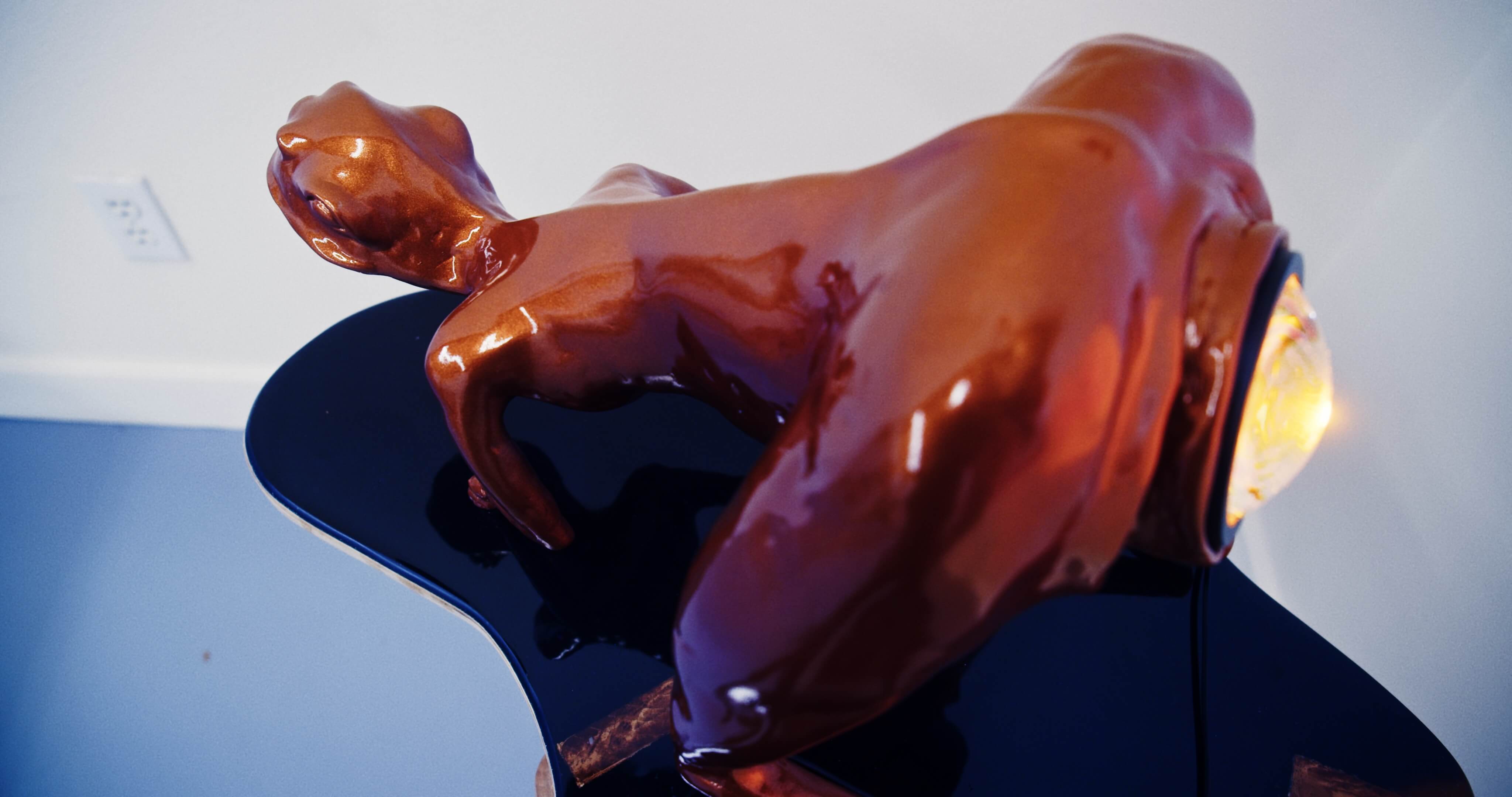
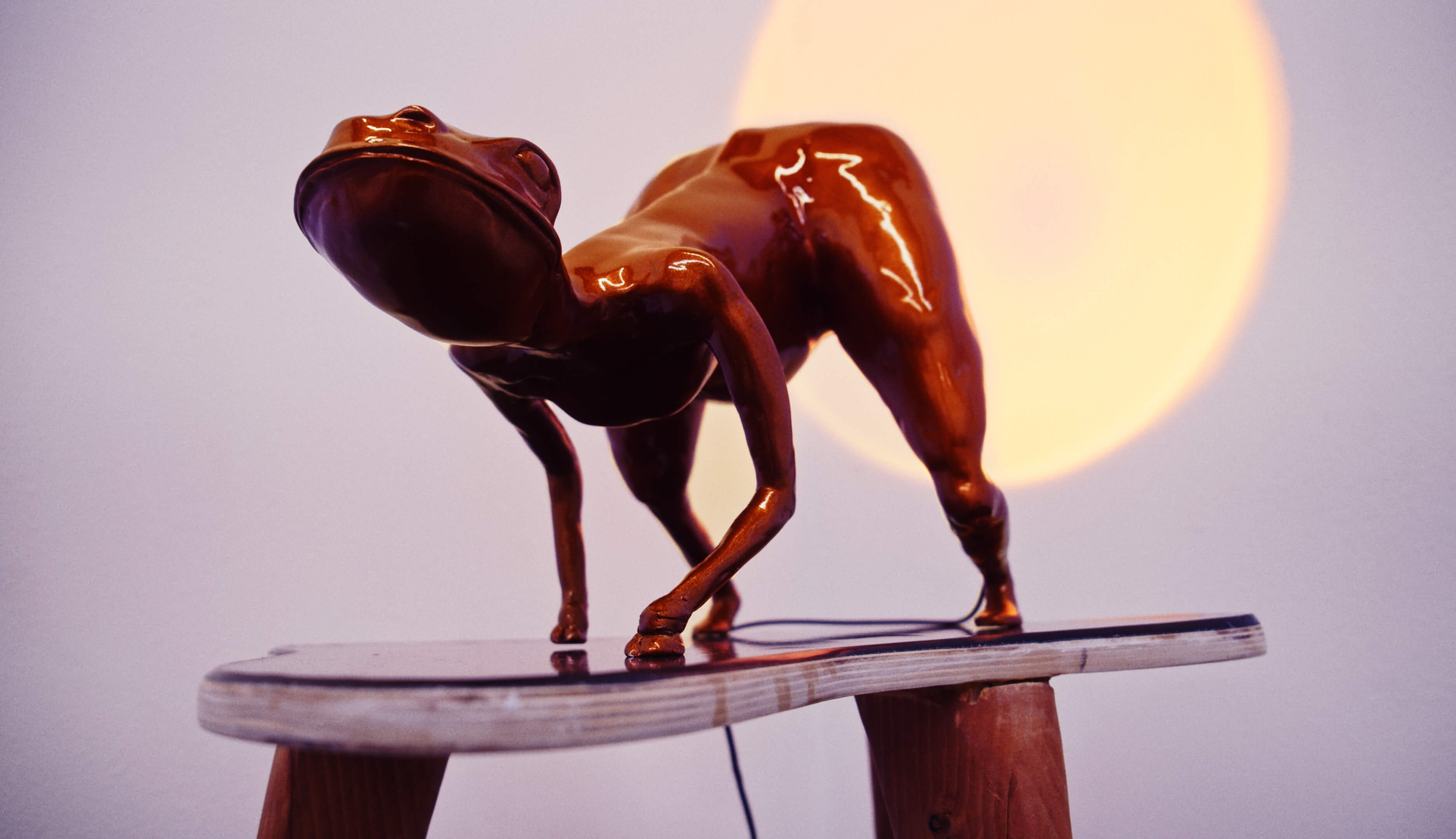
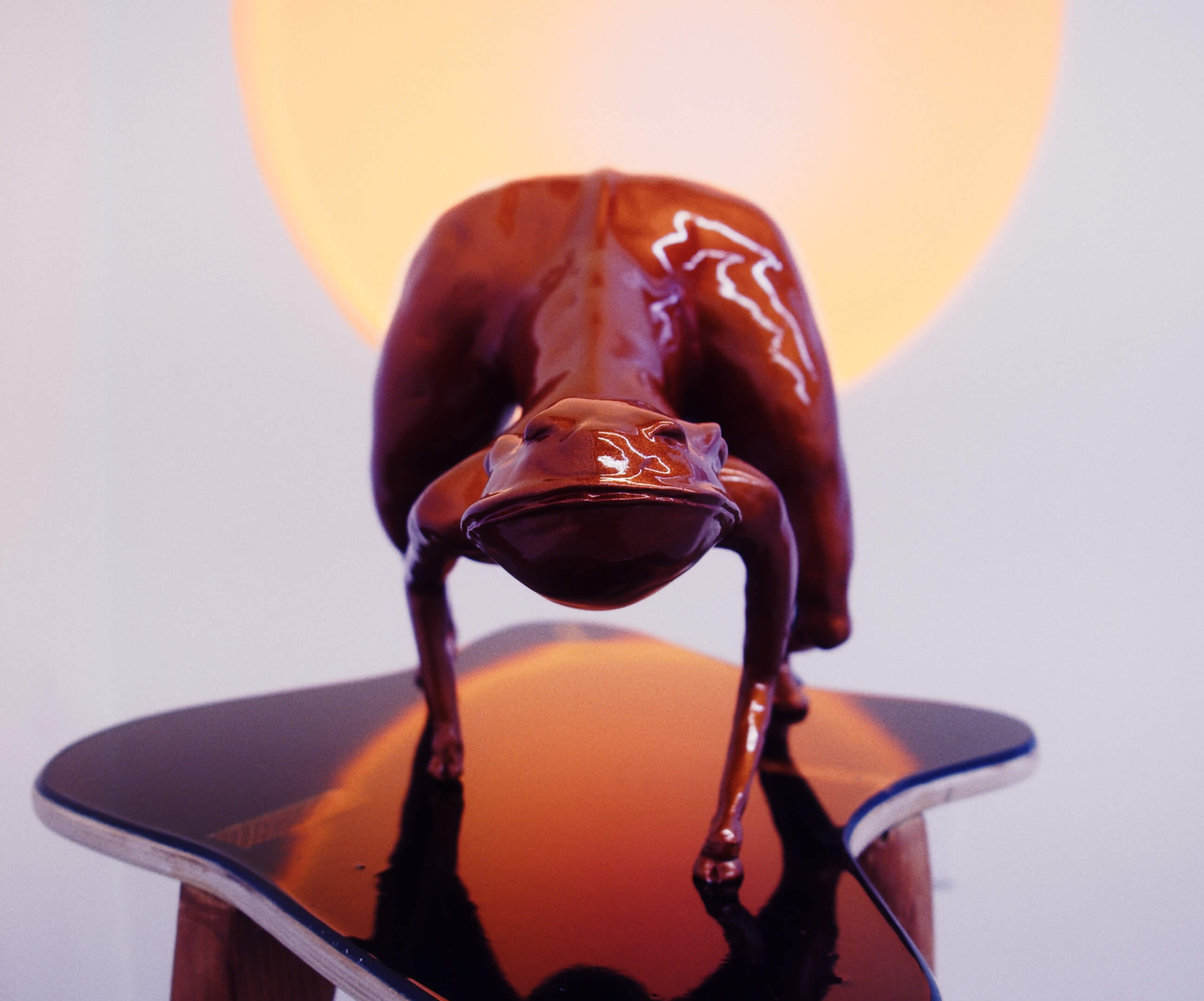
Lantern (2024), by The Subscription, is an epoxy sculpture depicting something in between a creature, an object, and the symbolic principle of abject radiance that inspires all ecstasy and horror, cutting the paths of the planets, and fueling the wheels of time. It is also a functional tabletop lamp with an etched brass nameplate.